

By Bridget Bell, founder of Pumpkin · Published
To teach kids money skills, you don't need a debit card - you need repeated, hands-on practice with the underlying ideas: earning, saving, waiting, and making trade-offs. A card can be a nice tool later, but it's the concepts that actually stick. And research suggests money habits can begin forming by around age 7, which means the early years are prime time to start.
Here are four concrete methods you can use at home - with a jar and a notebook, or with an app that handles the tracking for you.
1. Start with earning, not allowance
An allowance that simply arrives teaches that money appears on schedule. Earning teaches that money follows effort - a far more useful lesson. Tie small rewards to completed chores, habits, and goals so your child feels the direct link between doing and getting.
Lead with earning-by-doing rather than dollars alone. A young child might earn points or screen time; an older one might earn money toward something specific. Either way, the muscle you're building is the same: value comes from contribution.
2. Make saving goals visible
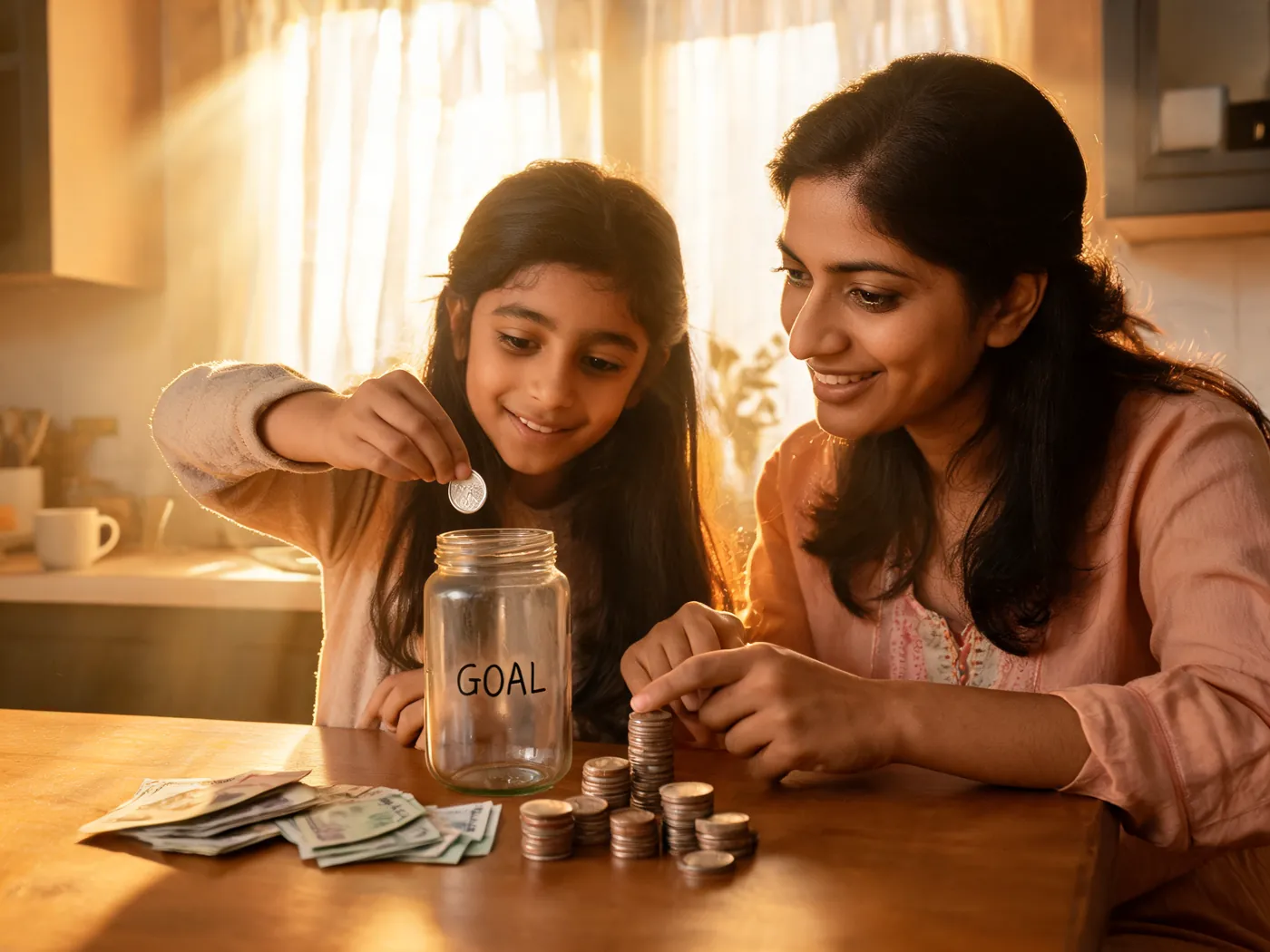
Abstract saving is hard for kids. A named goal - a Lego set, a game, a trip to the movies - makes it real. Break the goal into a visible progress bar so your child can watch it fill up as they earn.
A parent match helps it grow faster. Offering to add a little to whatever they save teaches the power of compounding and gives them a reason to keep going. It's the home version of an employer match, scaled to a 10-year-old's world.
3. Practice delayed gratification
The single most valuable money skill isn't math - it's the ability to wait. A child choosing to save toward a bigger reward instead of spending on a small one right now is practicing exactly the self-control that predicts long-term financial health.
You can rehearse this with any currency. Banking screen time toward a weekend movie night teaches the same lesson as saving coins toward a toy. If you want to see how that works with minutes, our guide on turning screen time into something kids earn walks through it.
4. Turn lessons into a game
Kids learn money concepts fastest when the learning feels like play. Short, gamified quizzes about spending, saving, and giving - Pumpkin calls them Money Missions - turn abstract ideas into something a child wants to do. Streaks and small wins keep them coming back.
This kind of structured, standards-aligned content does the heavy lifting that a bare debit card never could. A card lets a kid spend; a good lesson teaches them why and when to.
Do it all without a card
None of these four methods require plastic. Pumpkin brings them together in one place - earning through chores, savings goals with parent matching, delayed-gratification practice across multiple currencies, and Money Missions - with no bank account or debit card required. Its content is teacher-validated and aligned to recognized K-12 financial standards, so you're not guessing at what to teach. Curious how it compares to card-based apps? Read chore & money apps that don't require a bank account or explore the full feature set.
Where to start
A debit card is a spending tool, not a teacher. To genuinely teach kids money skills, focus on the concepts: earn it, name a goal, learn to wait, and make the lessons fun. Do those four things consistently - starting as early as age 7 - and your child builds a foundation that outlasts any card. When you're ready, the card can come later; the wisdom comes first.
